Aboveground Tank Installation in Beaumont, Texas: What Industrial Buyers Need to Know

Beaumont sits at the center of one of the most industrially dense corridors in the United States. The Southeast Texas region, anchored by Beaumont, Port Arthur, and Orange, supports a concentration of petrochemical refineries, chemical processing plants, LNG facilities, and heavy manufacturing operations that few metro areas in the country can match. Aboveground storage tanks are foundational infrastructure for nearly every facility in that corridor, and understanding how installation works in this specific environment helps buyers, project managers, and facility operators make better decisions before a project gets underway.
Why Beaumont’s Industrial Environment Shapes Tank Installation
Tank installation anywhere requires careful planning, but Beaumont’s industrial landscape introduces considerations that aren’t present in every market. The region’s refinery and petrochemical density means that many installations occur within active facilities where operational continuity is non-negotiable. Shutdowns are expensive, and installation contractors working in these environments need to coordinate around live process equipment, maintain strict safety protocols, and sequence their work in ways that don’t disrupt adjacent operations.
The Gulf Coast climate adds another layer of complexity. Southeast Texas is humid, prone to high winds during hurricane season, and subject to the kind of sustained moisture exposure that accelerates corrosion on metal infrastructure. Tanks installed in Beaumont need to be specified with those environmental conditions in mind from the outset, including appropriate coating systems, corrosion-resistant materials where warranted, and foundation designs that account for the region’s soil conditions and flood exposure history.
Types of Aboveground Storage Tanks Commonly Installed in the Region
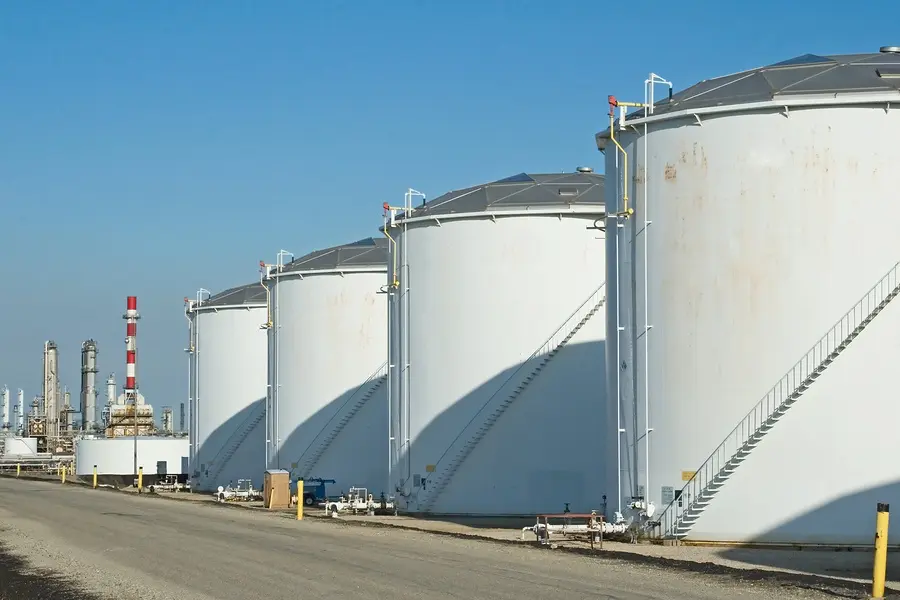
The Beaumont area’s industrial mix drives demand for a wide range of aboveground tank types. Crude oil and refined product storage tanks are the most prevalent given the concentration of refining operations, and these are typically large-diameter welded steel tanks built to API 650 standards. Chemical storage tanks serving the region’s petrochemical plants vary more widely in size and material specification depending on the product being stored, with some requiring specialized linings, exotic alloys, or pressure-rated construction.
Water storage tanks serve both industrial process needs and municipal infrastructure across the region. Agricultural tanks, though less dominant in Beaumont’s immediate industrial core than in other parts of Texas, are present in the surrounding rural areas. Bulk liquid storage for distribution operations and tank farms serving port and pipeline infrastructure round out the regional demand picture. Each tank type carries its own engineering requirements, regulatory framework, and installation methodology, which is why regional experience matters as much as general fabrication capability when evaluating contractors.
Foundation and Site Preparation
No aboveground tank installation begins with the tank itself. Site preparation and foundation work set the conditions that determine how a tank performs and how long it lasts. In Southeast Texas, foundation design deserves particular attention because the region’s soils can be soft, expansive, and prone to settlement in ways that create long-term problems for large, heavy structures if not properly engineered from the start.
Concrete ring wall foundations are standard for larger tanks, providing a stable perimeter support that distributes load while allowing drainage beneath the tank floor. Crushed stone or compacted fill pads are used for smaller installations where soil conditions permit. Regardless of foundation type, proper grading around the tank is essential for managing the region’s rainfall volumes and preventing standing water from accelerating corrosion at the base of the structure. Geotechnical investigation before foundation design is not optional on a serious installation project in this part of Texas. The cost of a soil boring program is negligible compared to the cost of addressing foundation settlement after a tank is in service.
The Installation Process
Aboveground tank installation follows a sequence that experienced contractors execute with a discipline that reflects years of working through the variables that can derail a project. Once site prep and foundation work are complete, tank erection begins with the floor plates, which are laid and welded to form the base of the structure. Shell courses are then erected and welded in sequence, working upward from the bottom ring to the top. Roof structure and roof plates follow, along with nozzle connections, manways, vents, and whatever ancillary components the tank’s service requirements dictate.
Throughout erection, weld inspection is ongoing rather than reserved for the end of the job. Reputable contractors perform visual inspection, dimensional checks, and non-destructive examination at each stage of shell construction rather than waiting for final completion to discover problems. Hydrostatic testing, which involves filling the completed tank with water to verify structural integrity and check for leaks before the tank ever sees its intended product, is standard practice on tanks built to API standards and provides the final verification that the installation is ready for service.
Regulatory and Compliance Considerations in Texas
Texas regulates aboveground storage tanks through the Texas Commission on Environmental Quality, which administers the state’s Aboveground Storage Tank program for tanks storing petroleum products at certain thresholds. Facilities subject to TCEQ oversight must register their tanks, maintain records, and comply with requirements around spill prevention, release detection, and secondary containment. The Beaumont area’s proximity to sensitive waterways and its history with industrial environmental incidents means that regulatory scrutiny in this region is real and ongoing.
Federal regulations add another layer for facilities that meet EPA Spill Prevention, Control, and Countermeasure thresholds, which require formal SPCC plans prepared by a licensed professional engineer. Contractors and facility operators working in Beaumont need to understand which regulatory frameworks apply to a given project before installation begins, because designing secondary containment, positioning tank vents, and specifying overfill protection are all decisions that need to reflect compliance requirements rather than be retrofitted after the fact.
Coating Systems and Corrosion Protection
Southeast Texas is genuinely hard on metal infrastructure, and a tank installation that doesn’t account for the region’s corrosion environment from day one is one that will demand premature maintenance or early replacement. Internal coatings are specified based on the product being stored, with different chemical exposures requiring different lining systems. External coatings protect against atmospheric corrosion and need to be selected for adhesion, flexibility, and resistance to the humidity and UV exposure that characterize the Gulf Coast environment year-round.
Cathodic protection is standard practice for tank floors, where contact between the metal bottom plate and the soil or foundation creates conditions for accelerated corrosion if left unaddressed. Impressed current systems or sacrificial anode arrays extend tank floor life significantly and are far cheaper to install during initial construction than to retrofit once corrosion has taken hold. Specifying the right corrosion protection package upfront is one of the highest-return decisions a facility operator can make on any tank installation project.
Choosing the Right Contractor for a Beaumont Installation
The concentration of industrial activity in Southeast Texas means there’s no shortage of contractors willing to bid tank work in the region. That makes contractor selection more important rather than less, because the range of capability and experience among bidders can be wide. Relevant API certifications, a documented history of tank work in petrochemical and refinery environments, and familiarity with TCEQ compliance requirements are baseline qualifications worth verifying before a contract is awarded.
Regional experience carries particular weight in a market like Beaumont, where the industrial culture, the regulatory environment, and the logistical realities of working around active refinery operations are all specific to this part of Texas. A contractor who has completed installations within the Beaumont-Port Arthur corridor understands those conditions in ways that translate directly to better project execution, fewer surprises, and installations that are built to hold up in the environment they’ll actually operate in.